-
Digital content.
原典作者:蒋贡康楚罗卓泰耶
Author: Jamgön Kongtrül Lodrö Thayé
释论者:阿阇黎喇嘛滇巴嘉晨
Commentary by: Acharya Lama Tenpa Gyaltsen Selections from the Commentary on The Presentation of Madhyamaka in the Treasury of Knowledge中译者:江長华 林霄
Chinese Translation: Changhua Chiang & Michelle Lin Physical edition: https://publications.nitarthainstitute.org/product/%e3%80%8a%e7%9f%a5%e8%af%86%e5%ae%9d%e8%97%8f%e4%b8%ad%e8%a7%82%e7%af%87%e3%80%8b-%e9%87%8a%e8%ae%ba%e8%8a%82%e9%80%89-%e7%ae%80%e4%bd%93-selected-madhyamaka-commentary-in-tok/ -
 仅限中国大陆学生购买。所有其他订单将被取消并退款。
 -
电子版 仅限中国大陆学生购买。所有其他订单将被取消并退款。
-
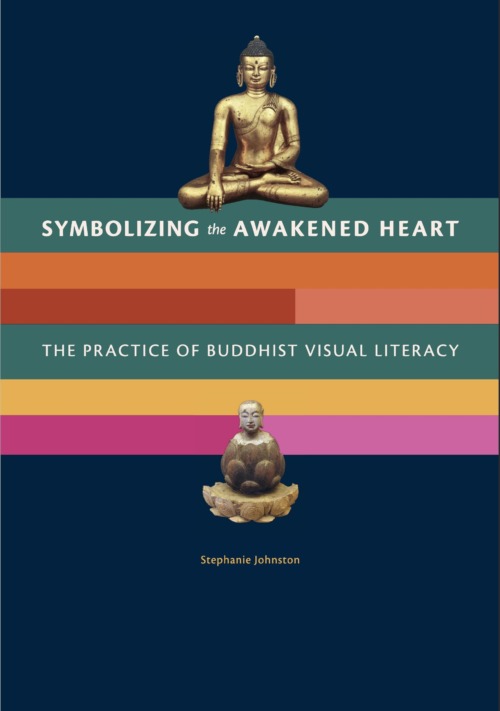 Please note, this is a digital EPUB delivered through our website. You will receive download instructions via email. About This Book The idea of this book is twofold: to lay the foundations for understanding and recognizing basic symbols of enlightenment and awakening in a Buddhist context. And, how understanding and recognizing those are processes of awakening in and of themselves. After an introduction to the topic of Buddhist visual literacy, in Part One, you will find the core skills necessary for reading art in a Buddhist way: the inevitability of symbolism, its range of use, and the mechanics in a Buddhist context. Part Two is a visual primer for identifying meaning in the symbolic elements of Buddhist art. Topics are connected in a spiral and sequential way, with key ideas being presented and refined as they are revisited and applied throughout the book. Part Three brings everything together in a hands-on application. This final layer of method guides you in experimenting, sleuthing, and applying these skills to a series of different works. This is Interactive Necessarily, this book invites you to interact. Without personally experienced exploration, the insight and inspiration that emerges from a good Buddhist art-based reading encounter, one that sparkles with awakening, can be elusive. So, topic-specific experiments, investigations, and questions appear throughout. The joy of discovery lies in engagement; as such, please allow yourself the time and space to try them out. Many are short and can be done at home or taken into the field, for instance, to a museum, a bus stop, on a walk, while shopping, into any situation, pretty much, and are more revealing when repeated over time. Contents Guide Introduction: Creativity and the Arts provides the historical and traditional landscape for Buddhist visual literacy, symbolism, and the art of creativity as a means to connect to awakening. It is grounded in the topics associated with Tibetan Buddhist higher education. Based on that grounding, Part One: The Power to Illuminate focuses on the how of art having the power to illuminate. It outlines the mechanics of meaning based on symbols. Part Two: What Does Awake Look Like? explores: What does "awake" look like, and how is it portrayed? Key episodes in Shakyamuni Buddha's life are presented to reveal the vocabulary of its symbolism, a necessity for reading Buddhist art. Part Three: Sleuthing for Awakening demonstrates how the materials from Parts One and Two work together through doing. Guided explorations and experiments bring the skills and tools of Buddhist visual literacy to bear on reading and investigating twelve different artworks. Resources provide support for this material. The contemporary teacher, artist, and writer Dzogchen Ponlop Rinpoche provides valuable context for the life of the Buddha and Buddhism. In addition, a topical bibliography is offered as an assist to further exploration and research into the ideas and themes of this book. By the end of this adventure, I hope you will have a good sense of Buddhist visual literacy in action. And, that insightful experiences and playful discoveries abound along the way, within this book and without.
 -
电子版 仅限中国大陆学生购买。所有其他订单将被取消并退款。
此手冊作為由竹慶本樂仁波切指導下的了義學院課程資料而出版。 《心與心的世界 3》中文資料手冊,2025年7月初稿 © 2025 了義學院 版權所有。未經書面許可,不得以任何方式改編或複製本書的任何部分。以下為原英文版權頁。 Mind & Its World 3 Sourcebook © 2023 Nītārtha Institute -
电子版 仅限中国大陆学生购买。所有其他订单将被取消并退款。
-
电子版 仅限中国大陆学生购买。所有其他订单将被取消并退款。
-
电子版 仅限中国大陆学生购买。所有其他订单将被取消并退款。
-

电子版 仅限中国大陆学生
新版《心與心的世界1》和《心與心的世界2》對應英文版的兩本同名手冊,兩本加起來是對堪布仁波切所著的原典《心的科學:邏輯海典心髓》的完整的釋論。新版替代2021中文版的《心的科學:邏輯海典心髓釋論》。新版按照英文版編排,並增加了阿闍黎謝拉布嘉誠的釋論,和每課後的分析式禪修和聞思題。《心與心的世界2》繼續以《心的科學:邏輯海典心髓》為原典探索兩大主題,1)概念心和非概念心如何認知各自的對境,為這個心的日常體驗提供敘述性語言,從而有助於清晰辨認心的運作和陷入迷惑的方式。2)心王和五十一心所的闡說。每一課包括課外閱讀、分析式禪修、聞思題。 -
电子版 仅限中国大陆学生购买。所有其他订单将被取消并退款。
新版《心與心的世界1》和《心與心的世界2》對應英文版的兩本同名手冊,兩本加起來是對堪布仁波切所著的原典《心的科學:邏輯海典心髓》的完整的釋論。新版替代2021中文版的《心的科學:邏輯海典心髓釋論》。新版按照英文版編排,並增加了阿闍黎謝拉布嘉誠的釋論,和每課後的分析式禪修和聞思題。《心與心的世界1》詳細分析作為體驗者的這個心,它如何以如實和不如實的方式感知世界,原典《心的科學:邏輯海典心髓》教導心的分類,法教源泉是陳那和法稱的量論學傳統。要點是區分哪些面向的心如實地感知現象本來的樣子,哪些面向的心是錯亂迷惑的,並束縛我們於輪回。手冊還介紹了基礎乘中有部和經部關於二諦和感知理論的宗義思想。每一課包括課外閱讀、分析式禪修、聞思題。 -

(電子版。 僅限中國大陸學生購買。 Digital edition for China Mainland students only)
佛 性
中文資料手冊 (上冊)
BUD 630 佛性 如來的明光心 教 授 : 阿闍黎喇嘛滇巴嘉誠 Acharya Lama Tenpa Gyaltsen 卡爾‧布倫霍爾茲 Karl Brunnhölzl -

(电子版。 仅限中国大陆学生购买。 Digital Edition for China Mainland students only)
佛 性
中文资料手册 (上册)
BUD 630 佛性 如来的明光心 第四金刚句 (上册) 教 授 : 阿阇黎喇嘛滇巴嘉诚 Acharya Lama Tenpa Gyaltsen 卡尔·布伦霍尔兹 Karl Brunnhölzl