-
- The hardcopy book is shipped from the US. International customers may wish to explore local booksellers, Shambala Publications, or Amazon to save on shipping cost.
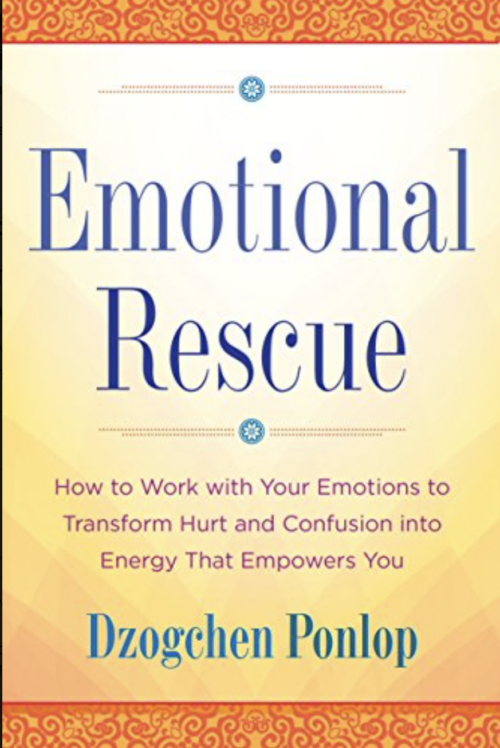
Author: Dzogchen Ponlop Rinpoche
In this life-changing book, acclaimed Buddhist teacher Dzogchen Ponlop Rinpoche shows how to free yourself from being a victim of your emotions by gaining the awareness and understanding that will help you harness their power. Emotions bring color and meaning to our lives, but they can also put us on an exhausting rollercoaster ride that takes us to blissful peak states, the depths of delusion and despair, and everything in between. It is only by learning to relate to our emotions skillfully that we benefit from their richness and glean wisdom, rather than letting them control us. Emotions get their power from a simple but deep-seated source: our lack of self-knowledge. When we bring awareness to our experience of emotions, something truly amazing happens—they lose their power to make us miserable. In this book, Rinpoche leads us through the three steps of his Emotional Rescue Plan. Mindful Gap is the practice of creating a safe distance between you and your emotions, which gives you the psychological space to work with their energy. Clear Seeing involves recognizing the bigger picture. Last, Letting Go is the practice of releasing stressful physical and emotional energy through exercise, relaxation, and awareness. With each step, we become increasingly familiar with the inner workings of our emotions, seeing straight to the heart of anger, fear, passion, jealousy, and pride. With time and practice, instead of leading us astray, our emotions become our guide towards living a more compassionate, creative, and fulfilling life. Dzogchen Ponlop Rinpoche is a widely celebrated Buddhist teacher and the author of Rebel Buddha: A Guide to a Revolution of Mind. ("Rinpoche" is an honorific reserved for highly respected Buddhist teachers.) He is the founder and president of Nalandabodhi, an international network of Buddhist centers. -
- The hardcopy book is shipped from the US. International customers may wish to explore local booksellers, Shambala Publications, or Amazon to save on shipping cost.
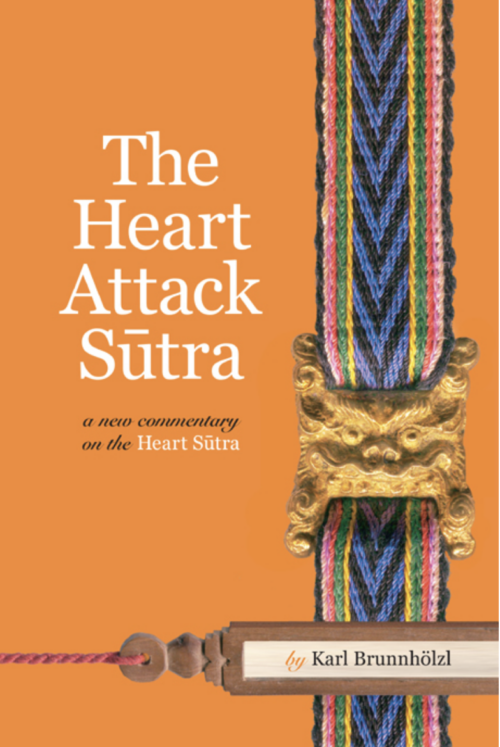
Author: Mitra Dr. Karl Brunnhölzl
A guide to the famous Heart Sūtra that reveals the tenderness and compassion underlying the striking rhetoric of this popular Buddhist text The radical message of the Heart Sūtra, one of Buddhism’s most famous texts, is a sweeping attack on everything we hold most dear: our troubles, the world as we know it, even the teachings of the Buddha himself. Several of the Buddha’s followers are said to have suffered heart attacks and died when they first heard its assertion of the basic groundlessness of our existence—hence the title of this book. Overcoming fear, the Buddha teaches, is not to be accomplished by shutting down or building walls around oneself, but instead by opening up to understand the illusory nature of everything we fear—including ourselves. In this book of teachings, Karl Brunnhölzl guides practitioners through this ‘crazy’ sutra to the wisdom and compassion that lie at its core. Karl Brunnhölzl, MD, was trained as a physician and also studied Tibetology. He received his systematic training in Tibetan language and Buddhist philosophy and practice at the Marpa Institute for Translators, founded by Khenpo Tsultrim Gyamtso Rinpoche. Since 1989 he has been a translator and interpreter from Tibetan and English. He is presently involved with the Nitartha Institute as a teacher and translator. -
- The hardcopy book is shipped from the US. International customers may wish to explore local booksellers, Shambala Publications, or Amazon to save on shipping cost.
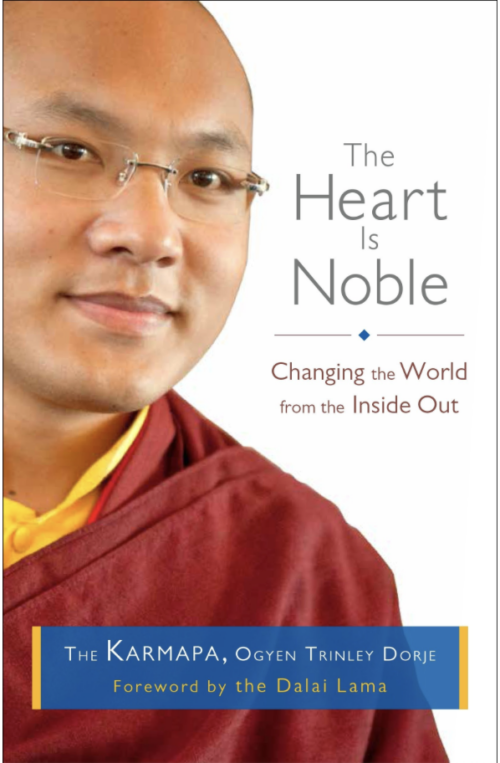
Author: Karmapa Ogyen Trinley Dorje
If you are inspired to take up his challenge, the Karmapa offers a path for participating in a global community that is based on compassion. In these chapters, he shares his vision for bringing social action into daily life, on a scale we can realistically manage through the choices we make every day—what to buy, what to eat, and how to relate honestly and bravely with our friends and family and coworkers. His fresh and encouraging perspective shows us that we have the strength to live with kindness in the midst of the many challenges we face as socially and environmentally conscious beings. Because he sees the world through the lens of the interdependence of all beings, he sees that humans can change social and environmental problems by changing their attitudes and actions. And so, he shows ways that we can change our world by changing ourselves—by examining our own habits of consumption and by being willing to look into how our food reaches our table and how the products we buy are made. In his chapter on gender, he points out that we don’t have to label others according to a social construct.
If his viewpoint seems optimistic, it is—and it’s also demanding. The Karmapa calls on us to open our mind and heart to the innumerable connections we share with others—in our families, communities, social systems, and on our planet. Thanks to the depth of his spiritual training, and the breadth of his curiosity about the world and his love for it, he presents a relevant framework for understanding what it means to be human now—and why it’s imperative that we concern ourselves with the well-being of all others. He points to a world we can create through our own effort, using a resource we already have in abundance—the basic nobility of our human heart. The 17th Gyalwang Karmapa, Ogyen Trinley Dorje, is the spiritual head of one of the major schools of Tibetan Buddhism. The 900-year-old lineage of Karmapas has included some of Tibet’s greatest spiritual masters. Born to nomadic parents in rural Tibet, he was identified while still a young child as the heir to this leadership position. In 2000, the Karmapa’s dramatic escape to India from Chinese-ruled Tibet at the age of fourteen propelled him onto the world stage. Since then, he has emerged as an international Buddhist leader and environmental activist, founding Khoryug, a region-wide environmental protection program. The Karmapa has been dubbed the "new face of Tibetan Buddhism," and many Tibetans look to the Karmapa for inspiration in their struggle to preserve their embattled culture. In 2008, he made his historic first visit to America. -
Digital content.
原典作者:蒋贡康楚罗卓泰耶
Author: Jamgön Kongtrül Lodrö Thayé
释论者:阿阇黎喇嘛滇巴嘉晨
Commentary by: Acharya Lama Tenpa Gyaltsen Selections from the Commentary on The Presentation of Madhyamaka in the Treasury of Knowledge中译者:江長华 林霄
Chinese Translation: Changhua Chiang & Michelle Lin Physical edition: https://publications.nitarthainstitute.org/product/%e3%80%8a%e7%9f%a5%e8%af%86%e5%ae%9d%e8%97%8f%e4%b8%ad%e8%a7%82%e7%af%87%e3%80%8b-%e9%87%8a%e8%ae%ba%e8%8a%82%e9%80%89-%e7%ae%80%e4%bd%93-selected-madhyamaka-commentary-in-tok/ -
 NOTE: For shipping within the US only. One hundred and thirteen definition flashcards drawn from the Classifications of Mind root text. English, Tibetan, and Sanskrit translations included.
 -
 NOTE: For shipping within the US only. Ninety six definition flashcards drawn from the Collected Topics root text. English, Tibetan, and Sanskrit translations included.
 -
 由阿闍梨喇嘛滇巴嘉誠編纂的根本文本。 它呈現了在 Vasubandhu 的 abhidharma 傳統中呈現的對象的劃分和定義。 由 Michelle Lin 參考英文從藏文翻譯。
 -
 由阿阇梨喇嘛滇巴嘉诚编纂的根本文本。 它呈现了在 Vasubandhu 的 abhidharma 传统中呈现的对象的划分和定义。 Michelle Lin 参考英文从藏文翻译。
 -
Author: Acharya Lama Tenpa Gyaltsen Translators: Kimberly Colwell and Marcus Perman
Root text written by Acharya Lama Tenpa Gyaltsen. It presents the divisions and definitions of the Mind Only philosophical system. -
Translator: Ari Goldfield
A root text by Khenpo Tsültrim Gyamtso Rinpoche. It presents the divisions and definitions logic, and what constitutes valid and invalid reasoning as presented in the tradition of Dignāga and Dharmakīrti. -
Traducción del tibetano al inglés por Karl Brunnhölzl Traducción del inglés al español por Israel Lifshitz
Un texto raíz escrito por Khenpo Tsültrim Gyamtso Rinpoche. Presenta las divisiones y definiciones de los tipos de mente identificados en la tradición epistemológica de Dignāga y Dharmakīrti. -
Traducción del tibetano al inglés por Karl Brunnhölzl Traducción del inglés al español por Israel Lifshitz
Un texto raíz recopilado por Acharya Lama Tenpa Gyaltsen. Presenta las divisiones y las definiciones de los objetos como se presenta en la tradición de abhidharma de Vasubandhu. -
This edition is no longer available.
A New and Updated Edition of this Text Is Now Available Here: https://publications.nitarthainstitute.org/product/2025-commentary-on-the-sa%e1%b9%83dhinirmocana-sutra-chapters-one-through-five-chapter-eight/ -
 El libro aún se está actualizando, pero el borrador está disponible para la compra y uso personal. Para comprarlo, los estudiantes DEBEN aceptar los siguientes términos: POLÍTICA DE CURSOS BORRADOR PROVISIONAL Y ACUERDO DE COMPARTIR ARCHIVOS ELECTRÓNICOS:
- El costo del Cuaderno de Trabajo de Pensamiento Claro, Borrador Provisional en formato PDF es de USD $21.95 y no es reembolsable. Este monto servirá como pago de depósito para la compra de la versión final publicada del texto. Se le emitirá un código de cupón de descuento para la compra de la versión final, válido por un año después de la publicación del texto final.
- Nota: El cupón no se puede transferir a otra persona, no se puede usar para comprar otros textos y no es válido para ninguna versión de libro electrónico.
- Usted puede usar el Cuaderno de Trabajo de Pensamiento Claro, Borrador Provisional PDF durante la duración de la clase. Sin embargo, una vez que el curso haya concluido, generalmente determinado por la expiración del acceso a las grabaciones de video y audio del curso, DEBE eliminar el archivo PDF de su computadora, así como eliminar el correo electrónico que contiene el archivo PDF adjunto.
- Si prefiere trabajar con una copia impresa de este texto, puede imprimir una copia para su uso personal y también deberá destruirla después de su uso.
- Al final del curso, enviaremos un recordatorio por correo electrónico. En ese momento, se le pedirá que confirme respondiendo al correo electrónico, indicando que el archivo PDF y la copia impresa han sido eliminados. O, también puede informarnos proactivamente que han sido eliminados enviando un correo electrónico a: publications@nitarthainstitute.org
- Si prefiere no comprar la versión final del texto, todavía está obligado a eliminar/destruir el Cuaderno de Trabajo de Pensamiento Claro, Borrador Provisional, y no se emitirá un reembolso por el pago del depósito que realizó para acceder al Cuaderno de Trabajo de Pensamiento Claro, Borrador Provisional.
- Si decide comprar este texto, esto significa plenamente que ha comprendido y acepta esta política.
- Una vez que recibamos su pedido en el sitio web, enviaremos el PDF a la dirección de correo electrónico indicada en el pedido del sitio web. Utilice el mismo correo electrónico que utilizó para registrarse en el curso de Nitartha. Por favor, permita 72 horas para el procesamiento.
- El costo del Cuaderno de Trabajo de Pensamiento Claro, Borrador Provisional en formato PDF es de USD $21.95 y no es reembolsable. Este monto servirá como pago de depósito para la compra de la versión final publicada del texto. Se le emitirá un código de cupón de descuento para la compra de la versión final, válido por un año después de la publicación del texto final.
-
-
SELECCIONES DE LA PRESENTACIÓN DE MADHYAMAKA en EL TESORO DE CONOCIMIENTO por Jamgon Kongtrul Lodro Thaye
Traducción del tibetano al inglés: Karl Brunnhölzl, New Brunswick, Canadá, 2002
Traducción del inglés al español: Israel Lifshitz, Morelia, México 2014
-
-
For Self-pace Online Course, students will be using the Mind and Its World IV, Provisional Draft; students must agree with the following policy before placing the order:
PROVISIONAL DRAFT COURSEWARE POLICY & ELECTRONIC FILE SHARING ARRANGEMENT:
- The cost of the Mind and Its World IV, Provisional Draft in the form of a PDF document is USD $23.10 and non-refundable. This amount will serve as a deposit payment towards the purchase of the final published version of the text. A discount coupon code will be issued to you for the purpose of purchasing the final version, valid for one year after the publication of the final text. Note: The coupon cannot be transferred to another person, it cannot be used to purchase other texts, and not valid for any ebook versions.
- You may use the Mind and Its World IV, Provisional Draft PDF for the duration of the class. However, once the course has concluded, usually determined by the expiration of access to the course video and audio recordings, you MUST delete the PDF file from your computer, as well as delete the email containing the PDF file attachment.
- If you prefer to work with a hardcopy of this text, you are welcome to print a copy for your own personal use,and would also need to be destroyed after use.
- At the end of the course, we will send an email reminder. At that time, you will be required to confirm by replying to the email, stating that the PDF file and hard copy have been deleted. Or, you may also proactively inform us that they have been deleted by sending an email to publications@nitarthainstitute.org
- If you prefer to not purchase the final version of the text, you are still required to delete/destroy the Mind and Its World IV, Provisional Draft , and no refund will be issued for deposit payment you made to access the Mind and Its World IV, Provisional Draft .
- If you decide to purchase this text, it fully means you have understood and agree with this policy.
- Once we receive your website order, we will email the PDF to your email address indicated in the website order. Please use the same email as the one you used for registration to Nitartha course. Please be allow 72 hours for processing.
For questions, please email us at publications@nitarthainstitute.org
Mind and Its World IV examines the two Hinayana philosophical tenet systems: the Vaibhashika and Sautrantika schools. Specific topics include the definitions of the two schools, a discussion of their subschools, an in-depth examination of their presentations of the process of perception and objects of knowledge. Also included is a description of the paths and fruition. Selected readings, analytical meditations, study questions, and review summaries are included in the sourcebook. -
蒋贡康楚罗卓泰耶著
by Jamgön Kongtrül Lodrö Thayé
Selections from The Presentation of Madhyamaka in the Treasury of Knowledge
英译者:Karl Brunnhölzl © 2002, 2019, 2021 了义学院 & Karl Brunnhölzl
中译者:江長华 林霄 © 2023 了义学院
English translation by Karl Brunnhölzl © 2002, 2019, 2021 by Nītārtha Institute and Karl Brunnhölzl.
Chinese Translation by Changhua Chiang & Michelle Lin
-
蔣貢康楚羅卓泰耶著
by Jamgön Kongtrül Lodrö Thayé
Selections from The Presentation of Madhyamaka in the Treasury of Knowledge
英譯者:Karl Brunnhölzl © 2002, 2019, 2021 了義學院 & Karl Brunnhölzl
中譯者:江長華 林霄
English translation by Karl Brunnhölzl © 2002, 2019, 2021 by Nītārtha Institute and Karl Brunnhölzl.
Chinese Translation by Changhua Chiang & Michelle Lin
-
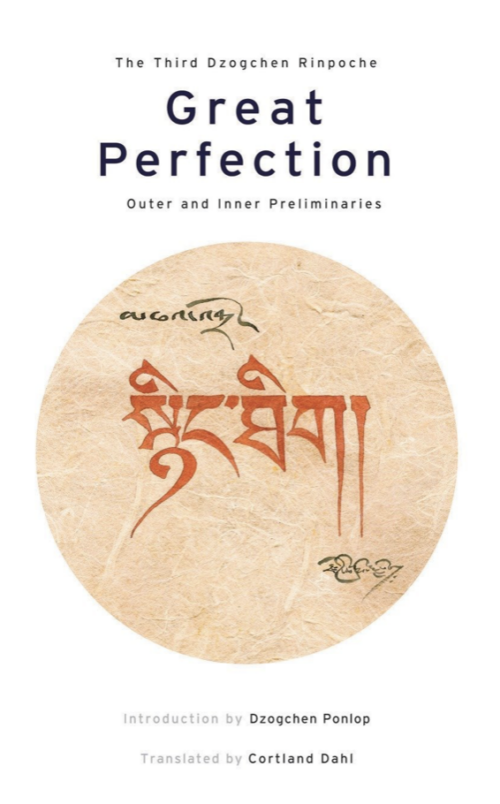
- The hardcopy book is shipped from the US. International customers may wish to explore local booksellers, Shambala Publications, or Amazon to save on shipping cost.
Author: Dzogchen Ponlop Rinpoche
In the Nyingma School of Tibetan Buddhism, the Great Perfection is considered the most profound and direct path to enlightenment. The instructions of this tradition present a spiritual shortcut--a radically direct approach that cuts through confusion and lays bare the mind's true nature of luminous purity. For centuries, these teachings have been taught and practiced in secret by some of the greatest adepts of the Buddhist tradition. Great Perfection: Outer and Inner Preliminaries contains detailed instructions on the foundational practices of this tradition, from "The Excellent Chariot," a practice manual compiled by the Third Dzogchen Rinpoche. Distilling the teachings of the Heart Essence of the Dakinis into an accessible, easy-to-practice format, The Excellent Chariotleads the reader through the entire Buddhist path, starting with basic Buddhist contemplations that work to dislodge deeply ingrained patterns of thinking and behaving, and continuing on to the most advanced and secret meditative practices of the Great Perfection. The teachings in this volume are drawn largely from the writings of the great Nyingma master Longchenpa and the root texts of the Heart Essence of the Dakinis itself. The Third Dzogchen Rinpoche begins by discussing the correct way to study and practice the Great Perfection teachings before presenting an overview of the Great Perfection lineage and an explanation on the meaning and importance of empowerment. In the chapters that follow, he presents practical instructions on the outer and inner preliminaries, the so-called "ng ndro" practices. These practices enable the practitioner to transform and purify the mind, preparing it for the advanced Great Perfection meditation of Trekch and T gal, the breakthrough and direct leap. In addition to the translation mentioned above, Great Perfection: Outer and Inner Preliminaries contains a beautiful introduction by the Dzogchen Ponlop Rinpoche, a contemporary Great Perfection master, and an extensive glossary of key Great Perfection terminology. The Heart Essence Series presents translations of seminal writings on the Great Perfection. Beginning with the works of the Heart Essence of the Dakinis and the Heart Essence of Vimalamitra, two cycles that lie at the core of the Great Perfection lineage, the series aims to provide scholars, teachers, and practitioners of these profound teachings with accurate and readable translations of the most important Great Perfection texts. Great Perfection: Separation and Breakthrough, a companion volume of restricted teachings, is also available, containing advanced teachings on the separation or rushen practices and the breakthrough stage of Great Perfection meditation. The Third Dzogchen Rinpoche (1759-1792) was the abbot of Dzogchen Monastery, one of the largest monastic centers in eastern Tibet. He was known particularly for his mastery of the Great Perfection teachings and his clear and accessible works on this topic. -
Out of stock
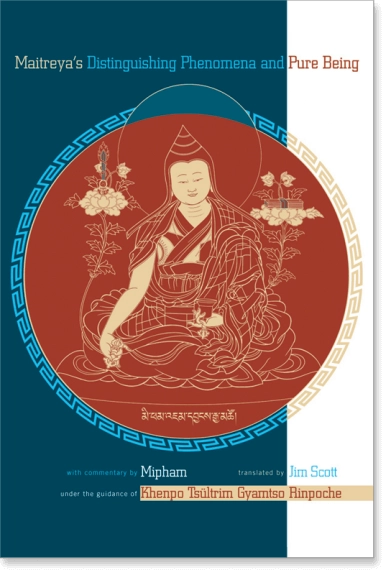 Translated by Jim Scott By Jamgon Mipham Contributions by Jamgon Mipham Distinguishing Phenomena and Pure Being was composed by Maitreya during the golden age of Indian Buddhism. Mipham's commentary supports Maitreya's text in a detailed analysis of how ordinary, confused consciousness can be transformed into wisdom. Easy-to-follow instructions guide the reader through the profound meditation that gradually brings about this transformation. This important and comprehensive work belongs on the bookshelf of any serious Buddhist practitioner—and indeed of anyone interested in realizing their full potential as a human being. Ju Mipham Rinpoche (1846–1912) was a great master of the Nyingma lineage of Tibetan Buddhism and one of the leading figures in the Rime nonsectarian movement in Tibet. This text, along with Ju Mipham Rinpoche's commentary, is taught extensively throughout the world by Khenpo Tsultrim Gyamtso Rinpoche, who considers this text to be of pivotal importance. Jim Scott, a longtime student of Khenpo Tsöltrim Gyamtso Rinpoche, translated this work at his request and under his guidance.
 -
 仅限中国大陆学生购买。所有其他订单将被取消并退款。