-
 仅限中国大陆学生购买。所有其他订单将被取消并退款。
 -
电子版 仅限中国大陆学生购买。所有其他订单将被取消并退款。
-
 该手册作为由竹庆本乐仁波切指导下的了义学院课程资料而出版。 《心与心的世界 3》中文资料手册,2025年7月初稿 © 2025 了义学院 版权所有。未经书面许可,不得以任何方式改编或复制本书的任何部分。以下为原英文版权页。 Mind & Its World 3 Sourcebook © 2023 Nītārtha Institute
 -
电子版 仅限中国大陆学生购买。所有其他订单将被取消并退款。
此手冊作為由竹慶本樂仁波切指導下的了義學院課程資料而出版。 《心與心的世界 3》中文資料手冊,2025年7月初稿 © 2025 了義學院 版權所有。未經書面許可,不得以任何方式改編或複製本書的任何部分。以下為原英文版權頁。 Mind & Its World 3 Sourcebook © 2023 Nītārtha Institute -
此手冊作為由竹慶本樂仁波切指導下的了義學院課程資料而出版。 《心與心的世界 3》中文資料手冊,2025年7月初稿 © 2025 了義學院 版權所有。未經書面許可,不得以任何方式改編或複製本書的任何部分。以下為原英文版權頁。 Mind & Its World 3 Sourcebook © 2023 Nītārtha Institute
-
《為新心開啟宗義門:略微詳細地論述自宗佛教宗義》中文版 2025年6月初版 © 2025 Nītārtha Institute了義學院 © 2001, 2009, 2010, 2015, 2016, 2018, 2019, 2023 by Nītārtha Institute, Dzogchen Ponlop Rinpoche, Acharya Lama Tenpa Gyaltsen, Acharya Kelsang Wangdi, Karl Brunnhölzl, and D. Phillip Stanley.了義學院,竹慶本樂仁波切、阿闍黎喇嘛滇巴嘉誠、阿闍黎凱桑旺迪、卡爾·布倫 霍茲爾、菲利普·史坦利博士
-
电子版 仅限中国大陆学生购买。所有其他订单将被取消并退款。
-
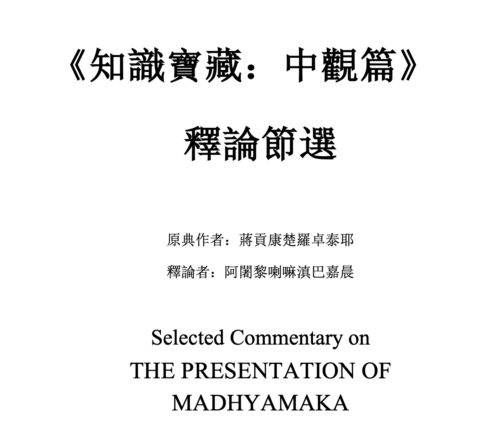
原典作者:蔣貢康楚羅卓泰耶
Author: Jamgön Kongtrül Lodrö Thayé
釋論者:阿闍黎喇嘛滇巴嘉晨 Commentary: Acharya Lama Tenpa Gyaltsen Selections from the Commentary on The Presentation of Madhyamaka in the Treasury of Knowledge中譯者:江長華 林霄Chinese Translation: Changhua Chiang & Michelle Lin -
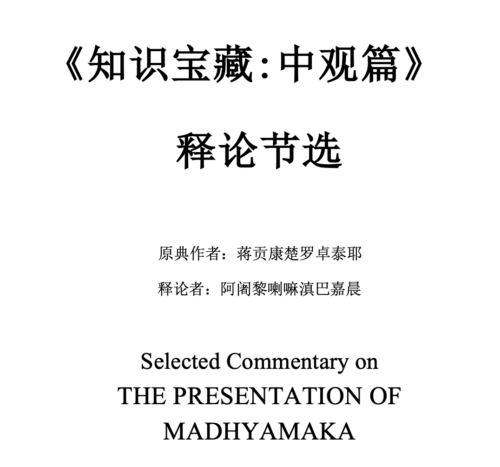
原典作者:蒋贡康楚罗卓泰耶
Author: Jamgön Kongtrül Lodrö Thayé
释论者:阿阇黎喇嘛滇巴嘉晨
Commentary by: Acharya Lama Tenpa Gyaltsen Selections from the Commentary on The Presentation of Madhyamaka in the Treasury of Knowledge中译者:江長华 林霄
Chinese Translation: Changhua Chiang & Michelle Lin Digital edition: https://publications.nitarthainstitute.org/product/%e3%80%8a%e7%9f%a5%e8%af%86%e5%ae%9d%e8%97%8f%e4%b8%ad%e8%a7%82%e7%af%87%e3%80%8b-%e9%87%8a%e8%ae%ba%e8%8a%82%e9%80%89-%e7%ae%80%e4%bd%93-selected-madhyamaka-commentary-in-tok-2/ -
Digital content.
原典作者:蒋贡康楚罗卓泰耶
Author: Jamgön Kongtrül Lodrö Thayé
释论者:阿阇黎喇嘛滇巴嘉晨
Commentary by: Acharya Lama Tenpa Gyaltsen Selections from the Commentary on The Presentation of Madhyamaka in the Treasury of Knowledge中译者:江長华 林霄
Chinese Translation: Changhua Chiang & Michelle Lin Physical edition: https://publications.nitarthainstitute.org/product/%e3%80%8a%e7%9f%a5%e8%af%86%e5%ae%9d%e8%97%8f%e4%b8%ad%e8%a7%82%e7%af%87%e3%80%8b-%e9%87%8a%e8%ae%ba%e8%8a%82%e9%80%89-%e7%ae%80%e4%bd%93-selected-madhyamaka-commentary-in-tok/ -
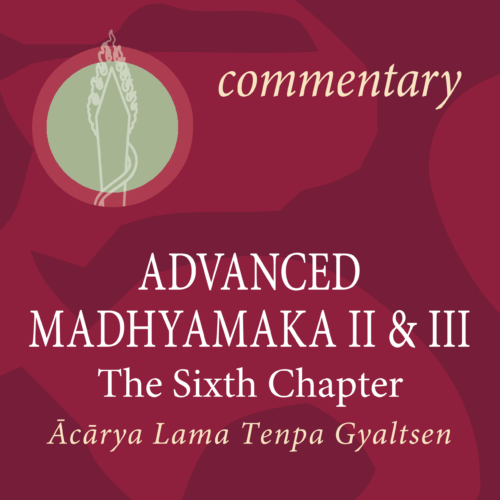 A commentary by Āchārya Lama Tenpa Gyaltsen
 -
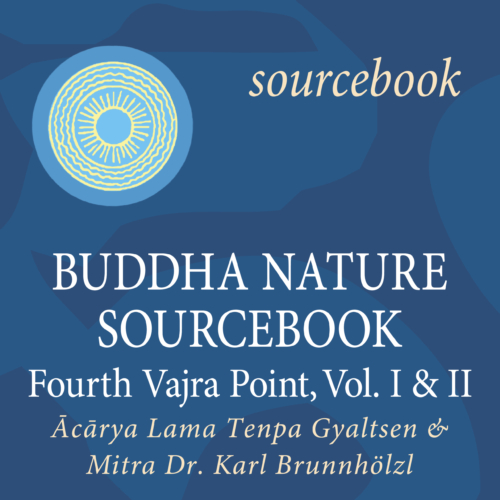
eBook available!
A Commentary by Acharya Lama Tenpa Gyaltsen and Karl Brunnhölzl
This is a newly updated sourcebook, a set of two volumes, produced from a series of talks given by Acharya Lama Tenpa Gyaltsen at Nītārtha Institute, Gampo Abbey, Cape Breton Island, Nova Scotia, Canada, in August and September 1998, and by a series of talks given by Karl Brunnhölzl at Nītārtha Institute, Nalanda West, Seattle, Washington, United States, September, October, and November 2018.
Available as eBook:
-
-
 Commentary on the Feast for the Fortunate Grounds 1-5 and Part I of Ground 6, by Dzogchen Ponlop Rinpoche, 2004. 387 pgs, Binder format. This is part the Nitartha Advanced Curriculum.
 -
 The commentary, Feast for the Fortunate, is the ninth Karmapa’s abridgement of the eighth Karmapa, Mikyö Dorje’s masterpiece, The Chariot of the Takpo Kagyü Siddhas. In it readers will find previously unavailable material on the Karmapa’s Middle Way view and a rare window into a philosophically charged era of Middle Way exposition in Tibetan Buddhism. Wangchuk Dorje’s comprehensive commentary on the Indian master Chandrakirti’s seminal text, the Madhyamakavatara, is marked by eloquent poetry, vigorous and extensive analysis, and heart instructions on breaking through the veils of confusion to independently experience the true nature of things. Includes root text and commentary by the ninth Karmapa Rangjung Dorje, translated by Tyler Dewar.
 -
A commentary by Ācārya Lama Tenpa Gyaltsen
-
 Commentary on THE OCEAN OF TEXTS ON REASONING Chapters One & Two The Dzogchen Ponlop Rinpoche & Āchārya Lama Tenpa Gyaltsen Oral Translation by Tyler Dewar Root Text Translation by Tyler Dewar Nītārtha Institute 2008
 -
Author: Acharya Lama Tenpa Gyaltsen
A presentation of the philosophical tenets of the Madhyamaka tradition of the Mahayana. Based on sections of Jamgön Kongtrul’s Lodrö Thaye’s Treasury of Knowledge, this text focuses on the Madhyamaka presentation of the two truths, the views of the subschools of the tradition (Prasangika and Svatantrika), and the fundamental understanding of emptiness. Includes root text and commentary by Jamgön Kongtrul Lodrö Thaye, translated by Karl Brunnhölzl. -
A commentary by Acharya Lama Tenpa Gyaltsen and Mitra Dr. Karl Brunnhölzl.
Root text translation by Mitra Dr. Karl Brunnhölzl.
2003, 2004, & 2009 Nītārtha Institute -
Out of stock
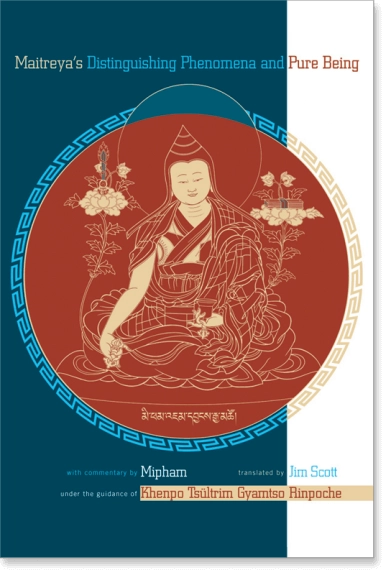 Translated by Jim Scott By Jamgon Mipham Contributions by Jamgon Mipham Distinguishing Phenomena and Pure Being was composed by Maitreya during the golden age of Indian Buddhism. Mipham's commentary supports Maitreya's text in a detailed analysis of how ordinary, confused consciousness can be transformed into wisdom. Easy-to-follow instructions guide the reader through the profound meditation that gradually brings about this transformation. This important and comprehensive work belongs on the bookshelf of any serious Buddhist practitioner—and indeed of anyone interested in realizing their full potential as a human being. Ju Mipham Rinpoche (1846–1912) was a great master of the Nyingma lineage of Tibetan Buddhism and one of the leading figures in the Rime nonsectarian movement in Tibet. This text, along with Ju Mipham Rinpoche's commentary, is taught extensively throughout the world by Khenpo Tsultrim Gyamtso Rinpoche, who considers this text to be of pivotal importance. Jim Scott, a longtime student of Khenpo Tsöltrim Gyamtso Rinpoche, translated this work at his request and under his guidance.
 -
Author: Acharya Lama Tenpa Gyaltsen Translators: Kimberly Colwell and Marcus Perman
Root text written by Acharya Lama Tenpa Gyaltsen. It presents the divisions and definitions of the Mind Only philosophical system. -
 This sourcebook offers a systematic presentation of the Mind Only (Cittamātra) tenet system, one of the principal Mahāyāna philosophical schools. The Mind Only school emphasizes the doctrine that the subjective and objective poles of perception are not different in substance, but mental in nature. Specific topics include discussions on perception, the fundamental notion of “mind only,” the three natures, self-awareness, and the all-base consciousness. Also included is a brief discussion of the paths and the fruition. Selected readings, analytical meditations, study questions, and review charts are included in the sourcebook. Includes root text written by Acharya Lama Tenpa Gyaltsen.
 -
A commentary by Ācārya Lama Tenpa Gyaltsen
This series (Introduction to Topic 8) presents Maitreya’s Ornament of Clear Realization based on the commentary by the eighth Karmapa Mikyö Dorje, Relief of the Noble Ones. Maitreya’s work is the central Mahayana text on the stages of the path and their fruition, for both the Hinayana and Mahayana. It is traditionally summarized in seventy points, or more generally in eight chapters. Whereas the Madhyamaka literature presents the explicit meaning of the Prajnaparamita Sutras, the subject matter of the Abhisamayalamkara is the hidden or implied meaning: the various stages of bodhisattvas, shravakas, and pratyekabuddhas on the path of the meditation on emptiness, from the stage of beginner up through buddhahood. Includes root text by Maitreya and commentary by Mikyö Dorje, translated by Mitra Dr. Karl Brunnhölzl.