- The hardcopy book is shipped from the US. International customers may wish to explore local booksellers, Shambala Publications, or Amazon to save on shipping cost.
-
-
 Also available as an eBook for Apple and Google. Mind and Its World I begins a detailed analysis of the subjective side of experience. It examines mind and how it perceives its world in valid and invalid ways based on the Classifications of Mind, which provides divisions and definitions of the types of mind identified in the epistemological tradition of Dignaga and Dharmakirti. The key point is the discernment of the aspects of mind that validly perceive things the way they are, which are distinguished from those aspects of mind that are mistaken and tainted by fundamental delusion, and thus keep one bound in samsara. It also introduces the two Hinayana philosophical systems, the Vaibhashika and Sautrantika schools, covering the two truths and the process of perception. Selected readings, analytical meditations, study questions, review summaries are included in the sourcebook.
 -
 Also available as an eBook for Apple and Google. Mind and Its World II examines the theme of karma. It begins the study of causes and conditions as presented in Collected Topics, the twelve nidanas, or chain of interdependent origination, and the distinction between primary minds and mental factors. It includes a detailed presentation of the mental factors from the Classifications of Mind. Selected readings, analytical meditations, study questions, and review summaries are included in the sourcebook.
 -
This is the updated Mind and Its World 4 Sourcebook for semester course and Summer Institute (not for Self-Paced Online Course).
Also available as an ebook for Apple and Google.The Mind and Its World 4 sourcebook presents the path and result of foundational Buddhism as found in the Vaibhāṣika and Sautrāntika philosophical traditions, based on The Gateway that Reveals the Philosophical Traditions to Fresh Minds root text. Talks by Dzogchen Ponlop Rinpoche, Acharya Kelsang Wangdi, Acharya Sherab Gyaltsen, and Professor Phil Stanley bring clarity to the subjects discussed in the root text. Key topics include the meaning of the path, the four applications of mindfulness, personal identitylessness, dependent origination, the four realities of the noble ones, the thirty-seven branches of enlightenment, and the results of the path. Numerous charts and diagrams are included as aids to understanding the material.
-
This is the updated Mind and Its World 3 Sourcebook for semester course and Summer Institute (not for Self-Paced Online Course).
Also available as an ebook for Apple and Google. Mind and Its World III first concludes the investigation into causes and results as presented in Collected Topics. It then turns to the analysis of the ways in which mind cognizes phenomena, particularly the ways in which conceptuality functions, by investigating the modes of engagement from Classifications of Mind and the methods that lead to cognition from Collected Topics. Selected readings, analytical meditations, study questions, and review summaries are included in the sourcebook. -
A commentary by Dzogchen Ponlop Rinpoche
This series (Introduction to Topic 8) presents Maitreya’s Ornament of Clear Realization based on the commentary by the eighth Karmapa Mikyö Dorje, Relief of the Noble Ones. Maitreya’s work is the central Mahayana text on the stages of the path and their fruition, for both the Hinayana and Mahayana. It is traditionally summarized in seventy points, or more generally in eight chapters. Whereas the Madhyamaka literature presents the explicit meaning of the Prajnaparamita Sutras, the subject matter of the Abhisamayalamkara is the hidden or implied meaning: the various stages of bodhisattvas, shravakas, and pratyekabuddhas on the path of the meditation on emptiness, from the stage of beginner up through buddhahood. Includes root text by Maitreya and commentary by Mikyö Dorje, translated by Mitra Dr. Karl Brunnhölzl. -
A commentary by Dzogchen Ponlop Rinpoche
This series (Introduction to Topic 8) presents Maitreya’s Ornament of Clear Realization based on the commentary by the eighth Karmapa Mikyö Dorje, Relief of the Noble Ones. Maitreya’s work is the central Mahayana text on the stages of the path and their fruition, for both the Hinayana and Mahayana. It is traditionally summarized in seventy points, or more generally in eight chapters. Whereas the Madhyamaka literature presents the explicit meaning of the Prajnaparamita Sutras, the subject matter of the Abhisamayalamkara is the hidden or implied meaning: the various stages of bodhisattvas, shravakas, and pratyekabuddhas on the path of the meditation on emptiness, from the stage of beginner up through buddhahood. Includes root text by Maitreya and commentary by Mikyö Dorje, translated by Mitra Dr. Karl Brunnhölzl. -
 El libro aún se está actualizando, pero el borrador está disponible para la compra y uso personal. Para comprarlo, los estudiantes DEBEN aceptar los siguientes términos: POLÍTICA DE CURSOS BORRADOR PROVISIONAL Y ACUERDO DE COMPARTIR ARCHIVOS ELECTRÓNICOS:
- El costo del Cuaderno de Trabajo de Pensamiento Claro, Borrador Provisional en formato PDF es de USD $21.95 y no es reembolsable. Este monto servirá como pago de depósito para la compra de la versión final publicada del texto. Se le emitirá un código de cupón de descuento para la compra de la versión final, válido por un año después de la publicación del texto final.
- Nota: El cupón no se puede transferir a otra persona, no se puede usar para comprar otros textos y no es válido para ninguna versión de libro electrónico.
- Usted puede usar el Cuaderno de Trabajo de Pensamiento Claro, Borrador Provisional PDF durante la duración de la clase. Sin embargo, una vez que el curso haya concluido, generalmente determinado por la expiración del acceso a las grabaciones de video y audio del curso, DEBE eliminar el archivo PDF de su computadora, así como eliminar el correo electrónico que contiene el archivo PDF adjunto.
- Si prefiere trabajar con una copia impresa de este texto, puede imprimir una copia para su uso personal y también deberá destruirla después de su uso.
- Al final del curso, enviaremos un recordatorio por correo electrónico. En ese momento, se le pedirá que confirme respondiendo al correo electrónico, indicando que el archivo PDF y la copia impresa han sido eliminados. O, también puede informarnos proactivamente que han sido eliminados enviando un correo electrónico a: publications@nitarthainstitute.org
- Si prefiere no comprar la versión final del texto, todavía está obligado a eliminar/destruir el Cuaderno de Trabajo de Pensamiento Claro, Borrador Provisional, y no se emitirá un reembolso por el pago del depósito que realizó para acceder al Cuaderno de Trabajo de Pensamiento Claro, Borrador Provisional.
- Si decide comprar este texto, esto significa plenamente que ha comprendido y acepta esta política.
- Una vez que recibamos su pedido en el sitio web, enviaremos el PDF a la dirección de correo electrónico indicada en el pedido del sitio web. Utilice el mismo correo electrónico que utilizó para registrarse en el curso de Nitartha. Por favor, permita 72 horas para el procesamiento.
- El costo del Cuaderno de Trabajo de Pensamiento Claro, Borrador Provisional en formato PDF es de USD $21.95 y no es reembolsable. Este monto servirá como pago de depósito para la compra de la versión final publicada del texto. Se le emitirá un código de cupón de descuento para la compra de la versión final, válido por un año después de la publicación del texto final.
-
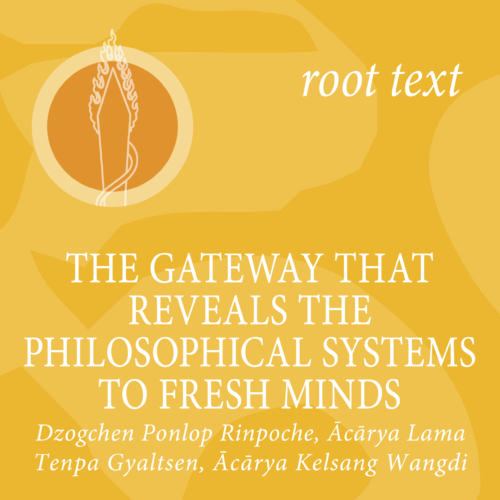 Updated Edition. Ebook available: for Apple and Google.
Author: Dzogchen Ponlop Rinpoche, Acharya Lama Tenpa Gyaltsen, and Acharya Kelsang Wangdi Translator: Karl Brunnhölzl
A root text written by Dzogchen Ponlop Rinpoche, Acharya Lama Tenpa Gyaltsen, and Acharya Kelsang Wangdi. It presents the divisions and definitions of the Vaibhashika and Sautrantika philosophical systems.
-
电子版 仅限中国大陆学生购买。所有其他订单将被取消并退款。
-
中国大陆的学生请在此处订购电子版: 电子版
该手册作为由竹庆本乐仁波切指导下的了义学院课程资料而出版。
《心与心的世界 4》中文资料手册,2026年1月初稿 © 2026 了义学院 版权所有。未经书面许可,不得以任何方式改编或复制本书的任何部分。以下为原英文版权页。 Mind & Its World 4 Sourcebook © 2024 Nītārtha Institute
-
电子版 仅限中国大陆学生购买。所有其他订单将被取消并退款。
-
中国大陆的学生请在此处订购电子版: 电子版
該手冊作為由竹慶本樂仁波切指導下的了義學院課程資料而出版。 《心與心的世界 4》中文資料手冊,2026年1月初稿 © 2026 了義學院 版權所有。未經書面許可,不得以任何方式改編或複製本書的任何部分。以下為原英文版權頁。 Mind & Its World 4 Sourcebook © 2024 Nītārtha Institute