-
 仅限中国大陆学生购买。所有其他订单将被取消并退款。
 -
 新版《心与心的世界1》和《心与心的世界2》对应英文版的两本同名手册,两本加起来是对堪布仁波切所著的原典《心的科学:逻辑海典心髓》的完整的释论。新版替代2021中文版的《心的科学:逻辑海典心髓释论》。新版按照英文版编排,并增加了阿阇黎谢拉布嘉诚的释论,和每课后的分析式禅修和闻思题。 《心与心的世界1》详细分析作为体验者的这个心,它如何以如实和不如实的方式感知世界,原典《心的科学:逻辑海典心髓》教导心的分类,法教源泉是陈那和法称的量论学传统。要点是区分哪些面向的心如实地感知现象本来的样子,哪些面向的心是错乱迷惑的,并束缚我们于轮回。手册还介绍了基础乘中有部和经部关于二谛和感知理论的宗义思想。每一课包括课外阅读、分析式禅修、闻思题。
 -
 新版《心与心的世界1》和《心与心的世界2》对应英文版的两本同名手册,两本加起来是对堪布仁波切所著的原典《心的科学:逻辑海典心髓》的完整的释论。新版替代2021中文版的《心的科学:逻辑海典心髓释论》。新版按照英文版编排,并增加了阿阇黎谢拉布嘉诚的释论,和每课后的分析式禅修和闻思题。 《心与心的世界2》继续以《心的科学:逻辑海典心髓》为原典探索两大主题,1)概念心和非概念心如何认知各自的对境,为这个心的日常体验提供叙述性语言,从而有助于清晰辨认心的运作和陷入迷惑的方式。2)心王和五十一心所的阐说。每一课包括课外阅读、分析式禅修、闻思题。
 -
 新版《心與心的世界1》和《心與心的世界2》對應英文版的兩本同名手冊,兩本加起來是對堪布仁波切所著的原典《心的科學:邏輯海典心髓》的完整的釋論。新版替代2021中文版的《心的科學:邏輯海典心髓釋論》。新版按照英文版編排,並增加了阿闍黎謝拉布嘉誠的釋論,和每課後的分析式禪修和聞思題。《心與心的世界1》詳細分析作為體驗者的這個心,它如何以如實和不如實的方式感知世界,原典《心的科學:邏輯海典心髓》教導心的分類,法教源泉是陳那和法稱的量論學傳統。要點是區分哪些面向的心如實地感知現象本來的樣子,哪些面向的心是錯亂迷惑的,並束縛我們於輪回。手冊還介紹了基礎乘中有部和經部關於二諦和感知理論的宗義思想。每一課包括課外閱讀、分析式禪修、聞思題。
 -
电子版 仅限中国大陆学生购买。所有其他订单将被取消并退款。
新版《心與心的世界1》和《心與心的世界2》對應英文版的兩本同名手冊,兩本加起來是對堪布仁波切所著的原典《心的科學:邏輯海典心髓》的完整的釋論。新版替代2021中文版的《心的科學:邏輯海典心髓釋論》。新版按照英文版編排,並增加了阿闍黎謝拉布嘉誠的釋論,和每課後的分析式禪修和聞思題。《心與心的世界1》詳細分析作為體驗者的這個心,它如何以如實和不如實的方式感知世界,原典《心的科學:邏輯海典心髓》教導心的分類,法教源泉是陳那和法稱的量論學傳統。要點是區分哪些面向的心如實地感知現象本來的樣子,哪些面向的心是錯亂迷惑的,並束縛我們於輪回。手冊還介紹了基礎乘中有部和經部關於二諦和感知理論的宗義思想。每一課包括課外閱讀、分析式禪修、聞思題。 -
 新版《心與心的世界1》和《心與心的世界2》對應英文版的兩本同名手冊,兩本加起來是對堪布仁波切所著的原典《心的科學:邏輯海典心髓》的完整的釋論。新版替代2021中文版的《心的科學:邏輯海典心髓釋論》。新版按照英文版編排,並增加了阿闍黎謝拉布嘉誠的釋論,和每課後的分析式禪修和聞思題。《心與心的世界2》繼續以《心的科學:邏輯海典心髓》為原典探索兩大主題,1)概念心和非概念心如何認知各自的對境,為這個心的日常體驗提供敘述性語言,從而有助於清晰辨認心的運作和陷入迷惑的方式。2)心王和五十一心所的闡說。每一課包括課外閱讀、分析式禪修、聞思題。
 -
电子版 仅限中国大陆学生
新版《心與心的世界1》和《心與心的世界2》對應英文版的兩本同名手冊,兩本加起來是對堪布仁波切所著的原典《心的科學:邏輯海典心髓》的完整的釋論。新版替代2021中文版的《心的科學:邏輯海典心髓釋論》。新版按照英文版編排,並增加了阿闍黎謝拉布嘉誠的釋論,和每課後的分析式禪修和聞思題。《心與心的世界2》繼續以《心的科學:邏輯海典心髓》為原典探索兩大主題,1)概念心和非概念心如何認知各自的對境,為這個心的日常體驗提供敘述性語言,從而有助於清晰辨認心的運作和陷入迷惑的方式。2)心王和五十一心所的闡說。每一課包括課外閱讀、分析式禪修、聞思題。 -
《為新心開啟宗義門:略微詳細地論述自宗佛教宗義》中文版 2025年6月初版 © 2025 Nītārtha Institute了義學院 © 2001, 2009, 2010, 2015, 2016, 2018, 2019, 2023 by Nītārtha Institute, Dzogchen Ponlop Rinpoche, Acharya Lama Tenpa Gyaltsen, Acharya Kelsang Wangdi, Karl Brunnhölzl, and D. Phillip Stanley.了義學院,竹慶本樂仁波切、阿闍黎喇嘛滇巴嘉誠、阿闍黎凱桑旺迪、卡爾·布倫 霍茲爾、菲利普·史坦利博士
-
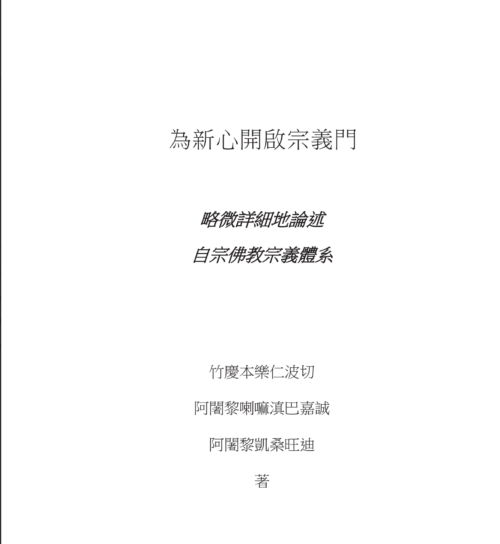
电子版 仅限中国大陆学生购买。所有其他订单将被取消并退款。
-
 If you purchased the Clear Thinking Provisional Draft, you’re eligible for a 50% discount on the 2025 edition! To redeem your discount, please use the discount code emailed to you. If you are missing your discount code, but have purchased the provisional draft, contact publications@nitartha.org.
 -
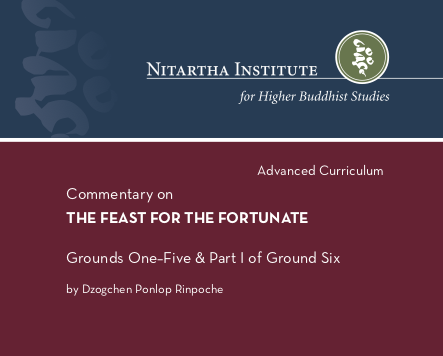 Commentary on the Feast for the Fortunate Grounds 1-5 and Part I of Ground 6, by Dzogchen Ponlop Rinpoche, 2004. 387 pgs, Binder format. This is part the Nitartha Advanced Curriculum.
 -
 The commentary, Feast for the Fortunate, is the ninth Karmapa’s abridgement of the eighth Karmapa, Mikyö Dorje’s masterpiece, The Chariot of the Takpo Kagyü Siddhas. In it readers will find previously unavailable material on the Karmapa’s Middle Way view and a rare window into a philosophically charged era of Middle Way exposition in Tibetan Buddhism. Wangchuk Dorje’s comprehensive commentary on the Indian master Chandrakirti’s seminal text, the Madhyamakavatara, is marked by eloquent poetry, vigorous and extensive analysis, and heart instructions on breaking through the veils of confusion to independently experience the true nature of things. Includes root text and commentary by the ninth Karmapa Rangjung Dorje, translated by Tyler Dewar.
 -
 Commentary: This text is published as part of the Nītārtha Institute study program directed by The Dzogchen Ponlop Rinpoche. Commentary on In Praise of Dharmadhātu © 2009 by The Dzogchen Ponlop Rinpoche and Nītārtha international. Root Text: Root stanzas from first edition draft translation of In Praise of Dharmadhātu translated by Karl Brunnhölzl. © 2005 Karl Brunnhölzl and Nītārtha Institute.
 -
A commentary by Acharya Sherab Gyaltsen
Root verses and commentary on An Exposition Of The Presentation of the Philosophical Systems of the Great Vehicle An Exposition that Reveals the Presentation of the Philosophical Systems of the Chittamatrikas of the Great Vehicle by Dzogchen Ponlop Rinpoche. Translated by Karl Brunnhölzl, Tyler Dewar, and Scott Wellenbach. -
Commentary by Dzogchen Ponlop Rinpoche
This series explicates one of the principal Indian classics of the Madhyamaka tradition, Chandrakirti’s Madhyamakavatara (Entrance to the Middle Way), along with the Kagyü commentary by the eighth Karmapa, The Chariot of the Dakpo Kagyüs. These transcripts cover the Madhyamakavatara’s eleven chapters, which correlate with the ten bhumis (grounds) and the ten paramitas (perfections), plus the ultimate bhumi of buddhahood. The focus is particularly on the sixth chapter of the Madhyamakavatara, which discusses prajna (transcendental knowledge) and its realization of emptiness. Main topics include the selflessness of phenomena and the individual, and the impossibility of finding a self anywhere with the range of phenomenal experience. Includes root text by Chandrakirti and commentary by Mikyö Dorje, translated by Elizabeth M. Callahan. -
Commentary by Dzogchen Ponlop Rinpoche
This series explicates one of the principal Indian classics of the Madhyamaka tradition, Chandrakirti’s Madhyamakavatara (Entrance to the Middle Way), along with the Kagyü commentary by the eighth Karmapa, The Chariot of the Dakpo Kagyüs. These transcripts cover the Madhyamakavatara’s eleven chapters, which correlate with the ten bhumis (grounds) and the ten paramitas (perfections), plus the ultimate bhumi of buddhahood. The focus is particularly on the sixth chapter of the Madhyamakavatara, which discusses prajna (transcendental knowledge) and its realization of emptiness. Main topics include the selflessness of phenomena and the individual, and the impossibility of finding a self anywhere with the range of phenomenal experience. Includes root text by Chandrakirti and commentary by Mikyö Dorje, translated by Elizabeth M. Callahan. -
Commentary by Dzogchen Ponlop Rinpoche
This series explicates one of the principal Indian classics of the Madhyamaka tradition, Chandrakirti’s Madhyamakavatara (Entrance to the Middle Way), along with the Kagyü commentary by the eighth Karmapa, The Chariot of the Dakpo Kagyüs. These transcripts cover the Madhyamakavatara’s eleven chapters, which correlate with the ten bhumis (grounds) and the ten paramitas (perfections), plus the ultimate bhumi of buddhahood. The focus is particularly on the sixth chapter of the Madhyamakavatara, which discusses prajna (transcendental knowledge) and its realization of emptiness. Main topics include the selflessness of phenomena and the individual, and the impossibility of finding a self anywhere with the range of phenomenal experience. Includes root text by Chandrakirti and commentary by Mikyö Dorje, translated by Elizabeth M. Callahan. -
Commentary by Dzogchen Ponlop Rinpoche
This series explicates one of the principal Indian classics of the Madhyamaka tradition, Chandrakirti’s Madhyamakavatara (Entrance to the Middle Way), along with the Kagyü commentary by the eighth Karmapa, The Chariot of the Dakpo Kagyüs. These transcripts cover the Madhyamakavatara’s eleven chapters, which correlate with the ten bhumis (grounds) and the ten paramitas (perfections), plus the ultimate bhumi of buddhahood. The focus is particularly on the sixth chapter of the Madhyamakavatara, which discusses prajna (transcendental knowledge) and its realization of emptiness. Main topics include the selflessness of phenomena and the individual, and the impossibility of finding a self anywhere with the range of phenomenal experience. Includes root text by Chandrakirti and commentary by Mikyö Dorje, translated by Elizabeth M. Callahan. -
 Commentary on THE OCEAN OF TEXTS ON REASONING Chapters One & Two The Dzogchen Ponlop Rinpoche & Āchārya Lama Tenpa Gyaltsen Oral Translation by Tyler Dewar Root Text Translation by Tyler Dewar Nītārtha Institute 2008
 -
This edition is no longer available.
A New and Updated Edition of this Text Is Now Available Here: https://publications.nitarthainstitute.org/product/2025-commentary-on-the-sa%e1%b9%83dhinirmocana-sutra-chapters-one-through-five-chapter-eight/ -
 This expanded second edition features the profound oral commentary by Dzogchen Ponlop Rinpoche on the Saṃdhinirmocana Sūtra (Unraveling the Intent of the Buddha), a crucial sūtra for the Yogācāra tradition. This transcript now includes Rinpoche's teachings on the prologue, the first five chapters, which illuminate the five defining characteristics of ultimate reality and the presentation of the all-base consciousness, as well as Chapter Eight, which delves into the topic of meditation. Presented with remarkable clarity and detail, Rinpoche's commentary is accompanied by the oral translation of Mitra Tyler Dewar and the root text translation by Gregory Forgues. This edition is published with the generous patronage and supervision of 84000: Translating the Words of the Buddha, ensuring the accuracy and accessibility of this vital text.
 -
 A commentary by Dzogchen Ponlop Rinpoche.
 -

- The hardcopy book is shipped from the US. International customers may wish to explore local booksellers, Shambala Publications, or Amazon to save on shipping cost.
Author: Dzogchen Ponlop Rinpoche
In this life-changing book, acclaimed Buddhist teacher Dzogchen Ponlop Rinpoche shows how to free yourself from being a victim of your emotions by gaining the awareness and understanding that will help you harness their power. Emotions bring color and meaning to our lives, but they can also put us on an exhausting rollercoaster ride that takes us to blissful peak states, the depths of delusion and despair, and everything in between. It is only by learning to relate to our emotions skillfully that we benefit from their richness and glean wisdom, rather than letting them control us. Emotions get their power from a simple but deep-seated source: our lack of self-knowledge. When we bring awareness to our experience of emotions, something truly amazing happens—they lose their power to make us miserable. In this book, Rinpoche leads us through the three steps of his Emotional Rescue Plan. Mindful Gap is the practice of creating a safe distance between you and your emotions, which gives you the psychological space to work with their energy. Clear Seeing involves recognizing the bigger picture. Last, Letting Go is the practice of releasing stressful physical and emotional energy through exercise, relaxation, and awareness. With each step, we become increasingly familiar with the inner workings of our emotions, seeing straight to the heart of anger, fear, passion, jealousy, and pride. With time and practice, instead of leading us astray, our emotions become our guide towards living a more compassionate, creative, and fulfilling life. Dzogchen Ponlop Rinpoche is a widely celebrated Buddhist teacher and the author of Rebel Buddha: A Guide to a Revolution of Mind. ("Rinpoche" is an honorific reserved for highly respected Buddhist teachers.) He is the founder and president of Nalandabodhi, an international network of Buddhist centers.