• 原典作者:蔣貢康楚羅卓泰耶

    Author: Jamgön Kongtrül Lodrö Thayé

    釋論者:阿闍黎喇嘛滇巴嘉晨 Commentary: Acharya Lama Tenpa Gyaltsen Selections from the Commentary on The Presentation of Madhyamaka in the Treasury of Knowledge
    中譯者:江長華 林霄
    Chinese Translation: Changhua Chiang & Michelle Lin
  • 蒋贡康楚罗卓泰耶著

    by Jamgön Kongtrül Lodrö Thayé

    Selections from The Presentation of Madhyamaka in the Treasury of Knowledge

    英译者:Karl Brunnhölzl © 2002, 2019, 2021 了义学院 & Karl Brunnhölzl

    中译者:江長华 林霄 © 2023 了义学院

    English translation by Karl Brunnhölzl © 2002, 2019, 2021 by Nītārtha Institute and Karl Brunnhölzl.

    Chinese Translation by Changhua Chiang & Michelle Lin

    • The hardcopy book is shipped from the US. International customers may wish to explore local booksellers, Shambala Publications, or Amazon to save on shipping cost.

    Author: Dr. Mitra Karl Brunnhölzl

    Mining for Wisdom within Delusion: Maitreya's "Distinction between Phenomena and the Nature of Phenomena" and Its Indian and Tibetan Commentaries

    Maitreya’s Distinction between Phenomena and the Nature of Phenomena distinguishes the illusory phenomenal world of saṃsāra produced by the confused dualistic mind from the ultimate reality that is mind’s true nature. The transition from the one to the other is the process of “mining for wisdom within delusion.” Maitreya’s text calls this “the fundamental change,” which refers to the vanishing of delusive appearances through practicing the path, thus revealing the underlying changeless nature of these appearances. In this context, the main part of the text consists of the most detailed explanation of nonconceptual wisdom—the primary driving force of the path as well as its ultimate result—in Buddhist literature. The introduction of the book discusses these two topics (fundamental change and nonconceptual wisdom) at length and shows how they are treated in a number of other Buddhist scriptures. The three translated commentaries, by Vasubandhu, the Third Karmapa, Rangjung Dorje, and Gö Lotsāwa, as well as excerpts from all other available commentaries on Maitreya’s text, put it in the larger context of the Indian Yogācāra School and further clarify its main themes. They also show how this text is not a mere scholarly document, but an essential foundation for practicing both the sūtrayāna and the vajrayāna and thus making what it describes a living experience. The book also discusses the remaining four of the five works of Maitreya, their transmission from India to Tibet, and various views about them in the Tibetan tradition.
  • Commentary by Dzogchen Ponlop Rinpoche

    This series explicates one of the principal Indian classics of the Madhyamaka tradition, Chandrakirti’s Madhyamakavatara (Entrance to the Middle Way), along with the Kagyü commentary by the eighth Karmapa, The Chariot of the Dakpo Kagyüs. These transcripts cover the Madhyamakavatara’s eleven chapters, which correlate with the ten bhumis (grounds) and the ten paramitas (perfections), plus the ultimate bhumi of buddhahood. The focus is particularly on the sixth chapter of the Madhyamakavatara, which discusses prajna (transcendental knowledge) and its realization of emptiness. Main topics include the selflessness of phenomena and the individual, and the impossibility of finding a self anywhere with the range of phenomenal experience. Includes root text by Chandrakirti and commentary by Mikyö Dorje, translated by Elizabeth M. Callahan.
  • Commentary by Dzogchen Ponlop Rinpoche

    This series explicates one of the principal Indian classics of the Madhyamaka tradition, Chandrakirti’s Madhyamakavatara (Entrance to the Middle Way), along with the Kagyü commentary by the eighth Karmapa, The Chariot of the Dakpo Kagyüs. These transcripts cover the Madhyamakavatara’s eleven chapters, which correlate with the ten bhumis (grounds) and the ten paramitas (perfections), plus the ultimate bhumi of buddhahood. The focus is particularly on the sixth chapter of the Madhyamakavatara, which discusses prajna (transcendental knowledge) and its realization of emptiness. Main topics include the selflessness of phenomena and the individual, and the impossibility of finding a self anywhere with the range of phenomenal experience. Includes root text by Chandrakirti and commentary by Mikyö Dorje, translated by Elizabeth M. Callahan.
  • 此手冊作為由竹慶本樂仁波切指導下的了義學院課程資料而出版。 《心與心的世界 3》中文資料手冊,2025年7月初稿 © 2025 了義學院 版權所有。未經書面許可,不得以任何方式改編或複製本書的任何部分。以下為原英文版權頁。 Mind & Its World 3 Sourcebook © 2023 Nītārtha Institute
  • 《為新心開啟宗義門:略微詳細地論述自宗佛教宗義》中文版 2025年6月初版 © 2025 Nītārtha Institute了義學院 © 2001, 2009, 2010, 2015, 2016, 2018, 2019, 2023 by Nītārtha Institute, Dzogchen Ponlop Rinpoche, Acharya Lama Tenpa Gyaltsen, Acharya Kelsang Wangdi, Karl Brunnhölzl, and D. Phillip Stanley.了義學院,竹慶本樂仁波切、阿闍黎喇嘛滇巴嘉誠、阿闍黎凱桑旺迪、卡爾·布倫 霍茲爾、菲利普·史坦利博士
  • 电子版 仅限中国大陆学生购买。所有其他订单将被取消并退款。

    由阿阇梨喇嘛滇巴嘉诚编纂的根本文本。 它呈现了在 Vasubandhu 的 abhidharma 传统中呈现的对象的划分和定义。 Michelle Lin 参考英文从藏文翻译。
  • Commentary: This text is published as part of the Nītārtha Institute study program directed by The Dzogchen Ponlop Rinpoche. Commentary on In Praise of Dharmadhātu © 2009 by The Dzogchen Ponlop Rinpoche and Nītārtha international. Root Text: Root stanzas from first edition draft translation of In Praise of Dharmadhātu translated by Karl Brunnhölzl. © 2005 Karl Brunnhölzl and Nītārtha Institute.
  • 电子版 仅限中国大陆学生购买。所有其他订单将被取消并退款。

    此手冊作為由竹慶本樂仁波切指導下的了義學院課程資料而出版。 《心與心的世界 3》中文資料手冊,2025年7月初稿 © 2025 了義學院 版權所有。未經書面許可,不得以任何方式改編或複製本書的任何部分。以下為原英文版權頁。 Mind & Its World 3 Sourcebook © 2023 Nītārtha Institute
  • Commentary by Dzogchen Ponlop Rinpoche

    This series explicates one of the principal Indian classics of the Madhyamaka tradition, Chandrakirti’s Madhyamakavatara (Entrance to the Middle Way), along with the Kagyü commentary by the eighth Karmapa, The Chariot of the Dakpo Kagyüs. These transcripts cover the Madhyamakavatara’s eleven chapters, which correlate with the ten bhumis (grounds) and the ten paramitas (perfections), plus the ultimate bhumi of buddhahood. The focus is particularly on the sixth chapter of the Madhyamakavatara, which discusses prajna (transcendental knowledge) and its realization of emptiness. Main topics include the selflessness of phenomena and the individual, and the impossibility of finding a self anywhere with the range of phenomenal experience. Includes root text by Chandrakirti and commentary by Mikyö Dorje, translated by Elizabeth M. Callahan.
    • The hardcopy book is shipped from the US. International customers may wish to explore local booksellers, Shambala Publications, or Amazon to save on shipping cost.

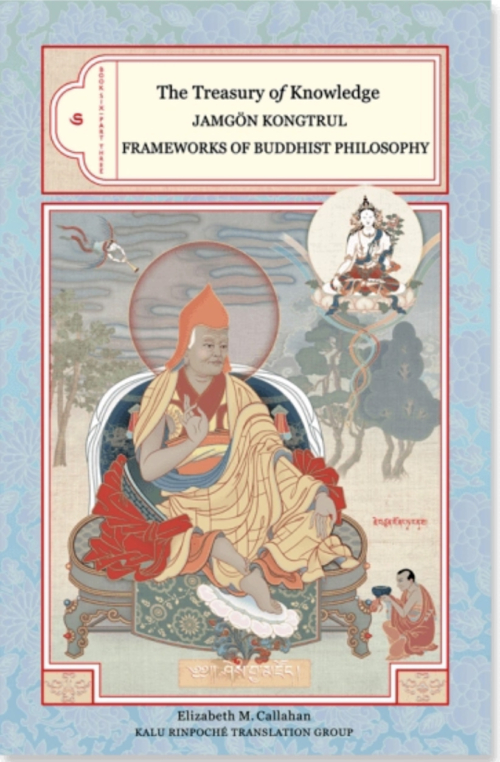
    Author: Jamgön Kongtrul Lodrö Thayé Translator: Elizabeth M. Callahan

    In Tibetan religious literature, Jamgön Kongtrül's Treasury of Knowledge in ten books stands out as a unique, encyclopedic masterpiece embodying the entire range of Buddhist teachings as it was preserved in Tibet. This volume, Frameworks of Buddhist Philosophy, is his masterful survey of the broad themes and subtle philosophical points found in more than fifteen hundred years of Buddhist philosophical writings. In a clear and systematic manner, he sets out the traditional framework of Buddhism's three vehicles and four philosophical systems, and provides an overview of the key points of each system. His syncretic approach, which emphasizes the strengths of each of the systems and incorporates them into a comprehensive picture of philosophical endeavor, is well-suited for scholar-practitioners who seek awakening through the combination of analytical inquiry and meditation.    

  • A commentary by Āchārya Lama Tenpa Gyaltsen
    • Also available as an eBook for Apple and Android devices.
    • The hardcopy book is shipped from the US. International customers may wish to explore local booksellers, Shambala Publications, or Amazon to save on shipping cost.

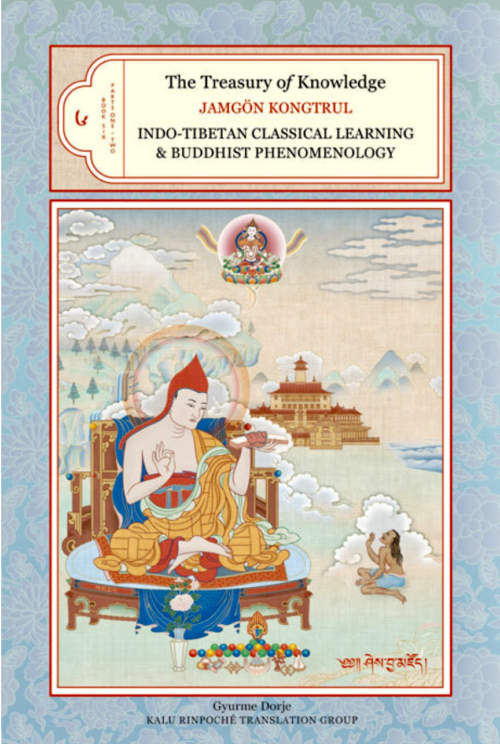
    Author: Jamgön Kongtrul Lodrö Thayé Translator & Editor: Gyurme Dorje

    Jamgön Kongtrul’s encyclopedic Treasury of Knowledge presents a complete account of the major lines of thought and practice that comprise Tibetan Buddhism. Among the ten books that make up this tour de force, Book Six is by far the longest—concisely summarizing the theoretical fields of knowledge to be studied prior to the cultivation of reflection and discriminative awareness. The first two parts of Book Six, contained in this volume, respectively concern Indo-Tibetan classical learning and Buddhist phenomenology. The former analyzes the traditional subjects of phonology and Sanskrit grammar, logic, fine art, and medicine, along with astrology, poetics, prosody, synonymics, and dramaturgy. The principal non-Buddhist philosophical systems of ancient India are then summarized and contrasted with the hierarchical meditative concentrations and formless absorptions through which the "summit of cyclic existence" can genuinely be attained. Part Two examines the phenomenological structures of Abhidharma—the shared inheritance of all Buddhist traditions—from three distinct perspectives, corresponding to the three successive turnings of the doctrinal wheel.  
  • Out of stock
    Translated by Jim Scott By Jamgon Mipham Contributions by Jamgon Mipham Distinguishing Phenomena and Pure Being was composed by Maitreya during the golden age of Indian Buddhism. Mipham's commentary supports Maitreya's text in a detailed analysis of how ordinary, confused consciousness can be transformed into wisdom. Easy-to-follow instructions guide the reader through the profound meditation that gradually brings about this transformation. This important and comprehensive work belongs on the bookshelf of any serious Buddhist practitioner—and indeed of anyone interested in realizing their full potential as a human being. Ju Mipham Rinpoche (1846–1912) was a great master of the Nyingma lineage of Tibetan Buddhism and one of the leading figures in the Rime nonsectarian movement in Tibet. This text, along with Ju Mipham Rinpoche's commentary, is taught extensively throughout the world by Khenpo Tsultrim Gyamtso Rinpoche, who considers this text to be of pivotal importance. Jim Scott, a longtime student of Khenpo Tsöltrim Gyamtso Rinpoche, translated this work at his request and under his guidance.
  • El libro aún se está actualizando, pero el borrador está disponible para la compra y uso personal. Para comprarlo, los estudiantes DEBEN aceptar los siguientes términos: POLÍTICA DE CURSOS BORRADOR PROVISIONAL Y ACUERDO DE COMPARTIR ARCHIVOS ELECTRÓNICOS:
    1. El costo del Cuaderno de Trabajo de Pensamiento Claro, Borrador Provisional en formato PDF es de USD $21.95 y no es reembolsable. Este monto servirá como pago de depósito para la compra de la versión final publicada del texto. Se le emitirá un código de cupón de descuento para la compra de la versión final, válido por un año después de la publicación del texto final.
      • Nota: El cupón no se puede transferir a otra persona, no se puede usar para comprar otros textos y no es válido para ninguna versión de libro electrónico.
    2. Usted puede usar el Cuaderno de Trabajo de Pensamiento Claro, Borrador Provisional PDF durante la duración de la clase. Sin embargo, una vez que el curso haya concluido, generalmente determinado por la expiración del acceso a las grabaciones de video y audio del curso, DEBE eliminar el archivo PDF de su computadora, así como eliminar el correo electrónico que contiene el archivo PDF adjunto.
      • Si prefiere trabajar con una copia impresa de este texto, puede imprimir una copia para su uso personal y también deberá destruirla después de su uso.
    3. Al final del curso, enviaremos un recordatorio por correo electrónico. En ese momento, se le pedirá que confirme respondiendo al correo electrónico, indicando que el archivo PDF y la copia impresa han sido eliminados. O, también puede informarnos proactivamente que han sido eliminados enviando un correo electrónico a: publications@nitarthainstitute.org
    4. Si prefiere no comprar la versión final del texto, todavía está obligado a eliminar/destruir el Cuaderno de Trabajo de Pensamiento Claro, Borrador Provisional, y no se emitirá un reembolso por el pago del depósito que realizó para acceder al Cuaderno de Trabajo de Pensamiento Claro, Borrador Provisional.
    5. Si decide comprar este texto, esto significa plenamente que ha comprendido y acepta esta política.
    6. Una vez que recibamos su pedido en el sitio web, enviaremos el PDF a la dirección de correo electrónico indicada en el pedido del sitio web. Utilice el mismo correo electrónico que utilizó para registrarse en el curso de Nitartha. Por favor, permita 72 horas para el procesamiento.
    Para preguntas, por favor envíenos un correo electrónico a: publications@nitarthainstitute.org
  • Commentary by Dzogchen Ponlop Rinpoche

    This series explicates one of the principal Indian classics of the Madhyamaka tradition, Chandrakirti’s Madhyamakavatara (Entrance to the Middle Way), along with the Kagyü commentary by the eighth Karmapa, The Chariot of the Dakpo Kagyüs. These transcripts cover the Madhyamakavatara’s eleven chapters, which correlate with the ten bhumis (grounds) and the ten paramitas (perfections), plus the ultimate bhumi of buddhahood. The focus is particularly on the sixth chapter of the Madhyamakavatara, which discusses prajna (transcendental knowledge) and its realization of emptiness. Main topics include the selflessness of phenomena and the individual, and the impossibility of finding a self anywhere with the range of phenomenal experience. Includes root text by Chandrakirti and commentary by Mikyö Dorje, translated by Elizabeth M. Callahan.
    • The hardcopy book is shipped from the US. International customers may wish to explore local booksellers, Shambala Publications, or Amazon to save on shipping cost.

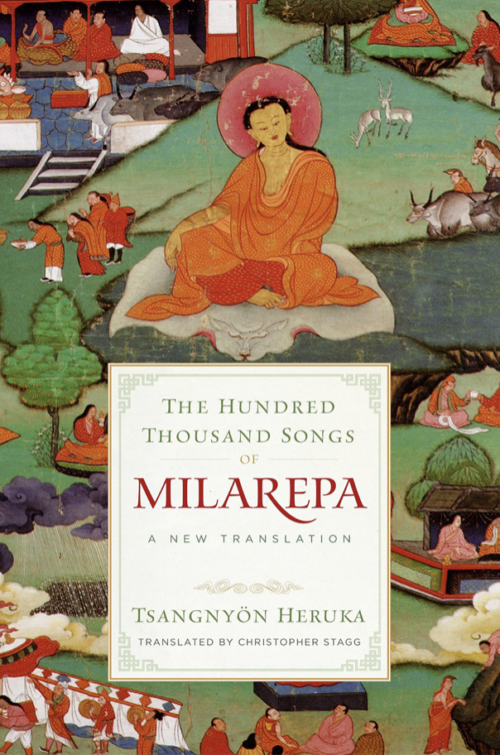
    Authors: Tsangnyön Heruka and Milarepa Translator: Christopher Stagg

    An authoritative new translation of the complete Hundred Thousand Songs of Milarepa, the teaching songs and stories from Tibet's most beloved Buddhist yogi, poet, and saint. Powerful and deeply inspiring, there is no book more beloved by Tibetans than The Hundred Thousand Songs, and no figure more revered than Milarepa, the great eleventh-century poet and saint. An ordinary man who, through sheer force of effort, faith, and perseverance, overcame nearly insurmountable obstacles on the spiritual path to achieve enlightenment in a single lifetime, he stands as an exemplar of what it is to lead a spiritual life. Milarepa, a cotton-clad yogi, wandered and taught the dharma, most famously through spontaneously composed songs, a colorful and down-to-earth way to convey the immediacy and depth of the Buddhist teachings. In this work, the songs are woven into a narrative that tells the stories of his most famous encounters with his students, including Gampopa and Rechungpa, and recount his victories over supernatural forces in the remote Himalayan mountains and caves where he meditated. In this authoritative new translation, prepared under the guidance of Dzogchen Ponlop Rinpoche, Christopher Stagg brilliantly brings to life the teachings of this extraordinary man. This classic of world literature is important for its narrative alone but is also a key contribution for those who seek inspiration for the spiritual path.
    Tsangnyön Heruka (1452-1507), or the "Madman of Tsang," so named for his eccentric behavior in yogic practice, compiled and arranged this most well-known collection of Milarepa’s songs four centuries after the death of the great yogin. Tsangnyön spent much of his life wandering in the same Himalayan regions as Milarepa and was considered by some to be his emanation.
      Christopher Stagg served as a translator and interpreter for the Nitartha Institute and Nalandabodhi, both under the direction of Dzogchen Ponlop Rinpoche. Also trained as a public school music teacher.
    • The hardcopy book is shipped from the US. International customers may wish to explore local booksellers, Shambala Publications, or Amazon to save on shipping cost.

    Author: Dzogchen Ponlop Rinpoche

    In the Nyingma School of Tibetan Buddhism, the Great Perfection is considered the most profound and direct path to enlightenment. The instructions of this tradition present a spiritual shortcut--a radically direct approach that cuts through confusion and lays bare the mind's true nature of luminous purity. For centuries, these teachings have been taught and practiced in secret by some of the greatest adepts of the Buddhist tradition. Great Perfection: Outer and Inner Preliminaries contains detailed instructions on the foundational practices of this tradition, from "The Excellent Chariot," a practice manual compiled by the Third Dzogchen Rinpoche. Distilling the teachings of the Heart Essence of the Dakinis into an accessible, easy-to-practice format, The Excellent Chariotleads the reader through the entire Buddhist path, starting with basic Buddhist contemplations that work to dislodge deeply ingrained patterns of thinking and behaving, and continuing on to the most advanced and secret meditative practices of the Great Perfection. The teachings in this volume are drawn largely from the writings of the great Nyingma master Longchenpa and the root texts of the Heart Essence of the Dakinis itself. The Third Dzogchen Rinpoche begins by discussing the correct way to study and practice the Great Perfection teachings before presenting an overview of the Great Perfection lineage and an explanation on the meaning and importance of empowerment. In the chapters that follow, he presents practical instructions on the outer and inner preliminaries, the so-called "ng ndro" practices. These practices enable the practitioner to transform and purify the mind, preparing it for the advanced Great Perfection meditation of Trekch and T gal, the breakthrough and direct leap. In addition to the translation mentioned above, Great Perfection: Outer and Inner Preliminaries contains a beautiful introduction by the Dzogchen Ponlop Rinpoche, a contemporary Great Perfection master, and an extensive glossary of key Great Perfection terminology. The Heart Essence Series presents translations of seminal writings on the Great Perfection. Beginning with the works of the Heart Essence of the Dakinis and the Heart Essence of Vimalamitra, two cycles that lie at the core of the Great Perfection lineage, the series aims to provide scholars, teachers, and practitioners of these profound teachings with accurate and readable translations of the most important Great Perfection texts. Great Perfection: Separation and Breakthrough, a companion volume of restricted teachings, is also available, containing advanced teachings on the separation or rushen practices and the breakthrough stage of Great Perfection meditation. The Third Dzogchen Rinpoche (1759-1792) was the abbot of Dzogchen Monastery, one of the largest monastic centers in eastern Tibet. He was known particularly for his mastery of the Great Perfection teachings and his clear and accessible works on this topic.
  • The commentary, Feast for the Fortunate, is the ninth Karmapa’s abridgement of the eighth Karmapa, Mikyö Dorje’s masterpiece, The Chariot of the Takpo Kagyü Siddhas. In it readers will find previously unavailable material on the Karmapa’s Middle Way view and a rare window into a philosophically charged era of Middle Way exposition in Tibetan Buddhism. Wangchuk Dorje’s comprehensive commentary on the Indian master Chandrakirti’s seminal text, the Madhyamakavatara, is marked by eloquent poetry, vigorous and extensive analysis, and heart instructions on breaking through the veils of confusion to independently experience the true nature of things. Includes root text and commentary by the ninth Karmapa Rangjung Dorje, translated by Tyler Dewar.
Go to Top